New Proposal to Regulate Artificial Intelligence in Mexico
Senator Lucía Trasviña Waldenrath, of Morena, introduced a bill to regulate Artificial Intelligence ("AI") systems in Mexico through amendments to the Ley Federal de Telecomunicaciones y Radiodifusión (Federal Telecommunications and Broadcasting Law).
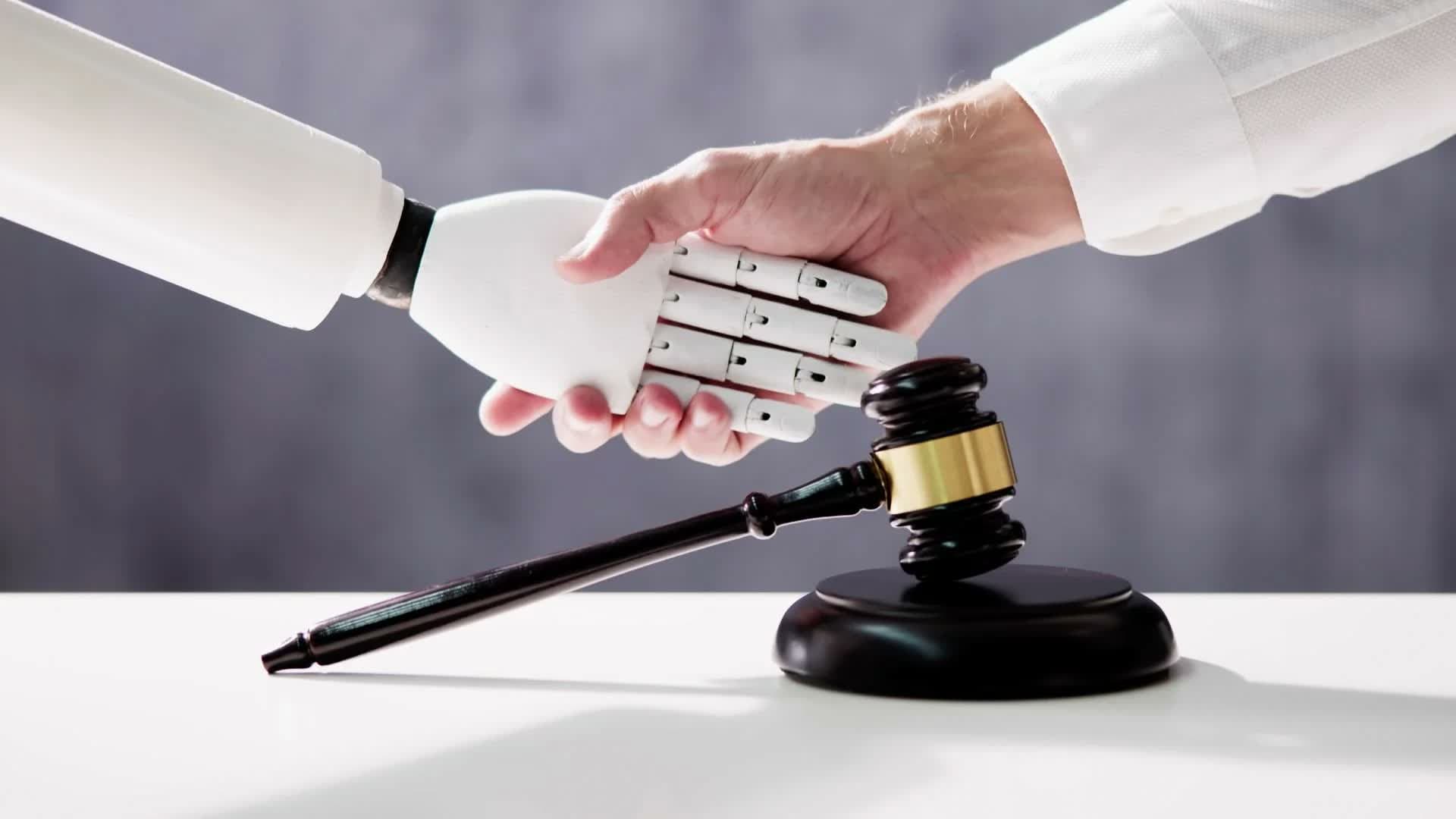
Senator Lucía Trasviña Waldenrath, of Morena, introduced a bill to regulate Artificial Intelligence ("AI") systems in Mexico through amendments to the Ley Federal de Telecomunicaciones y Radiodifusión (Federal Telecommunications and Broadcasting Law). This legislative initiative arises in a context in which AI has a growing impact on various areas of society, posing ethical, legal, and human rights challenges.
MAIN OBJECTIVES
The bill seeks to establish a regulatory framework for the development and use of AI in Mexico with the following objectives:
1. Promoting the responsible and ethical use of AI.
2. Protecting human rights and the dignity of individuals.
3. Guaranteeing the safety and sustainability of technological development.
4. Ensuring transparency and the protection of personal data.
KEY POINTS OF THE PROPOSAL
1) Definition and scope of application. AI is defined as software and hardware systems designed by humans to make decisions in physical or digital dimensions, including complex tasks such as learning, reasoning, and perception. Because these are software systems, it is sometimes difficult to determine the territory in which a law regulating them would apply; for this reason, the bill intends for this regulation to apply both to domestic and foreign providers, as well as to Mexican users who employ technologies developed abroad.
2) Supervision and regulation. It is proposed that the Instituto Federal de Telecomunicaciones (Federal Telecommunications Institute, "IFT") and the Instituto Nacional de Transparencia, Acceso a la Información y Protección de Datos Personales (National Institute for Transparency, Access to Information and Personal Data Protection, "INAI") be the agencies in charge of supervising and regulating the use of AI. Their functions would include:
• Establishing harmonized standards for the use and commercialization of AI systems.
• Creating specific requirements for "high-risk" systems.
• Overseeing transparency standards for systems that interact with humans.
3) Prohibited practices. The bill explicitly prohibits:
• The use of subliminal techniques to alter people's behavior.
• The exploitation of vulnerabilities of specific groups, such as children or persons with disabilities.
• Systems that rate the trustworthiness of individuals based on their social behavior.
4) Protection of personal data. AI systems that generate or manipulate images, audio, or video must incorporate security mechanisms, such as cryptographic files, to distinguish AI-generated content. In addition, the use of biometric identification technologies in public spaces is restricted, allowing it only in specific cases, such as the search for missing persons or the prevention of terrorist threats.
5) Ethics and human rights. The implementation of AI must be governed by fundamental principles, such as respect for human rights, the preservation of human dignity, and adherence to social ethics.
CHALLENGES
The effective enforcement of these regulations will depend on the authorities developing the technical and legal capabilities to evaluate AI systems. It will also be crucial to promote international cooperation, given the transnational nature of these technologies.
OPINIONS ON THE BILL
1) Positive opinions. Technology and human rights experts view favorably that Mexico is adopting a proactive stance toward AI regulation, aligning itself with international models such as those of the European Union and China. The proposal emphasizes data protection and human rights, which responds to global concerns about the risks of these technologies.
2) Negative opinions. Some specialists consider that the bill, although necessary, could face challenges in its implementation due to the country's lack of technological infrastructure and supervisory capacity.
3) Personal opinions.
- This proposal represents an important step toward the regulation of AI in Mexico, recognizing both the benefits and the risks associated with these technologies. While it faces implementation challenges, the bill places Mexico in line with global trends in technology regulation, with the potential to position the country as a benchmark in the ethical and sustainable development of AI.
- The collaboration between the IFT and the INAI is questionable, since on the one hand it could require greater clarity to avoid overlaps or legal gaps, and on the other hand, based on other bills that have been introduced, it is possible that the IFT and the INAI will cease to exist in the short term.
- The prohibition on the use of biometric identification technologies in public spaces may not be such a good idea, since they are highly useful for many other purposes. It may be better to simply regulate them.
- Rather than regulating the specific operation of AI, this bill merely establishes a kind of moral principles that should govern it; however, it does not achieve—and could not achieve—much more than that, since AI is a concept with too many variables and applications that we are only beginning to understand. If it were to be approved, this bill will surely suffer the same fate as the Ley Fintech (Fintech Law), which was quickly outpaced by advances in technology.
Sources: El Economista, Chanel Today, El Fronterizo.
If you wish to contact us, you may do so by sending an email to contacto@dma-legal.com.
For more details on the financial sector and its opportunities in Mexico, you can follow DMA Legal México on social media and visit its website.
Twitter: @DMALegal
LinkedIn: https://www.linkedin.com/company/dma-legal/